Quick answer
Hersch's lawn program is seven applications a season, from early spring through a late fall winterizer, with grub prevention in the third application. Keep kids and pets off the lawn for 2 hours after each application. If weeds are still there 10 to 21 days after an application, we come back for a service call.
What the program includes
Seven applications a season, from early spring through a late fall winterizer, plus grub prevention with the third application. Every application combines custom-blended, lake-safe fertilizer with weed control.
We also offer organic-based and fully organic programs. See what each application does.
Is the program right for my lawn?
It's a good fit if:
- You want a thick, green lawn without doing the feeding and weed control yourself.
- Weeds like dandelions, clover, creeping Charlie or crabgrass keep coming back.
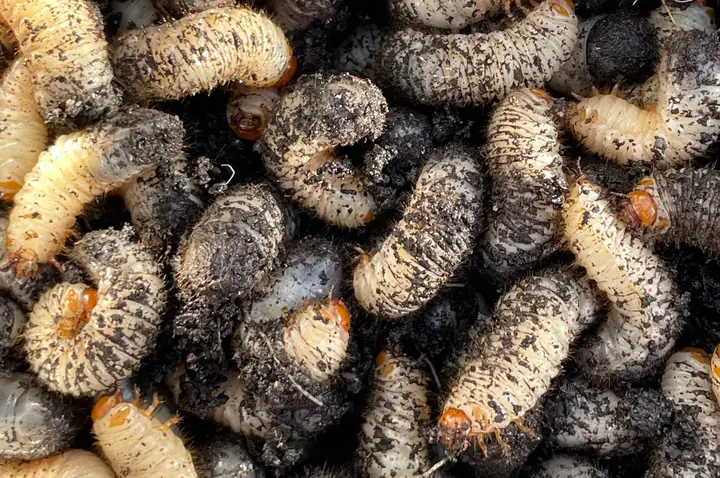
- You'd rather have grub prevention in place before grub damage shows up.
Prefer a lighter touch? We also offer organic-based and fully organic programs. Thin or compacted lawn? Pair the program with fall aeration and overseeding.
How applications are scheduled
The seven applications are spread across the season so each one matches what Michigan grass needs at that time of year:
- Early spring. Fertilizer to wake the lawn up, plus crabgrass preventer, timed before the soil warms enough for crabgrass to sprout. Weed control on any weeds already up.
- Late spring. Fertilizer plus broadleaf weed control while dandelions and clover are actively growing.
- Early summer. Fertilizer and weed control, plus grub prevention, applied before beetles lay the eggs that become grubs.
- Late summer. Fertilizer and weed control as the lawn recovers from summer heat and stress.
- Early fall. Fertilizer and fall weed control. Fall is the best time to knock out tough perennial weeds like dandelions and creeping Charlie.
- Late fall. Fertilizer, with weed control on anything still growing as the grass slows down for the year.
- Winterizer. The last feeding of the season, after the grass stops growing. The grass stores it over winter for a faster green-up next spring.
Grub prevention goes down with the third application, in early summer. Exact dates move with the weather each year, and you don't need to schedule anything.
Weeds we treat
Our technicians treat the broadleaf weeds that show up in metro Detroit lawns, including dandelions, clover, plantain, creeping Charlie and wild violets. Crabgrass is handled with a preventer in early spring, before it sprouts.
To be realistic: stubborn perennials like wild violets and creeping charlie usually take more than one application, and fall is when they're easiest to knock out. The goal over a season is a lawn thick enough that weeds have nowhere to start.
When you'll see results
Treated broadleaf weeds curl and brown out over the next week or two. Color and thickness build over the first several applications. A thin lawn won't turn thick in a month, but by the end of the first season you should see a real difference.
Watering and mowing
- Mow high. Michigan State University Extension recommends mowing at 3 inches or higher. Taller grass shades out weed seeds and grows deeper roots.
- Water about an inch a week, counting rain, split into a few waterings rather than one long soak.
How we figure your estimate
Every estimate is free, with no obligation.
- Tell us the address. Use the free quote form or call 1-800-THE-LAWN.
- We measure the lawn. You don't need to measure anything, and you don't need to be home.
- The office calls you with your price. It's based mainly on the size of your lawn, in square feet. Adding other services, like aeration or mosquito control, changes the total.
Service calls for weeds
Weed control takes time to work, so give it a week or two. Our policy: if weeds are still there 10 to 21 days after an application, call the office at 1-800-THE-LAWN and we'll come back for a service call.
For anything else between applications, call anytime. You can also request a service call online.
Is it safe for kids and pets?
Keep kids and pets off the lawn for 2 hours after an application. Your technician leaves a small flag on the lawn so everyone in the house knows it was treated that day.
Where it's available
Fertilization and weed control is available across our whole service area, from our Oak Park, Ann Arbor, Mount Clemens and Novi branches.
Popular in Royal Oak, Troy, Birmingham, West Bloomfield, Farmington Hills, Novi, Sterling Heights, Shelby Township, Dearborn, Brighton.
Questions
When do the applications happen?
Early spring, late spring, early summer, late summer, early fall and late fall, then a winterizer, with grub prevention in the early summer application. Exact dates move with the weather each year, and you don't need to schedule anything.
What if weeds come back after a treatment?
Some weeds take more than one application, especially wild violets and creeping Charlie. If weeds are still there 10 to 21 days after an application, call the office and we'll come back for a service call. You can also request a service call online.
What if it rains after an application?
Fertilizer needs water to soak in, so rain helps it. Weed control needs time to dry on the leaves. If heavy rain washes it off and the weeds don't die back, call the office.
Is it safe for kids and pets?
Keep kids and pets off the lawn for 2 hours after an application. Your technician leaves a small flag on the lawn so everyone in the house knows it was treated that day.
Do I need to be home?
No. Your technician treats the lawn, leaves a flag and leaves a note on what was done. Leave gates unlocked and keep pets inside on service day.
Is your fertilizer lake-safe?
Yes. Hersch's was one of the first companies to use custom-blended, lake-safe fertilizers. Michigan law has also restricted phosphorus fertilizer on lawns since 2012.
Can I start in the middle of the season?
Yes. You'll start with the next application on the schedule and stay on the route from there.