
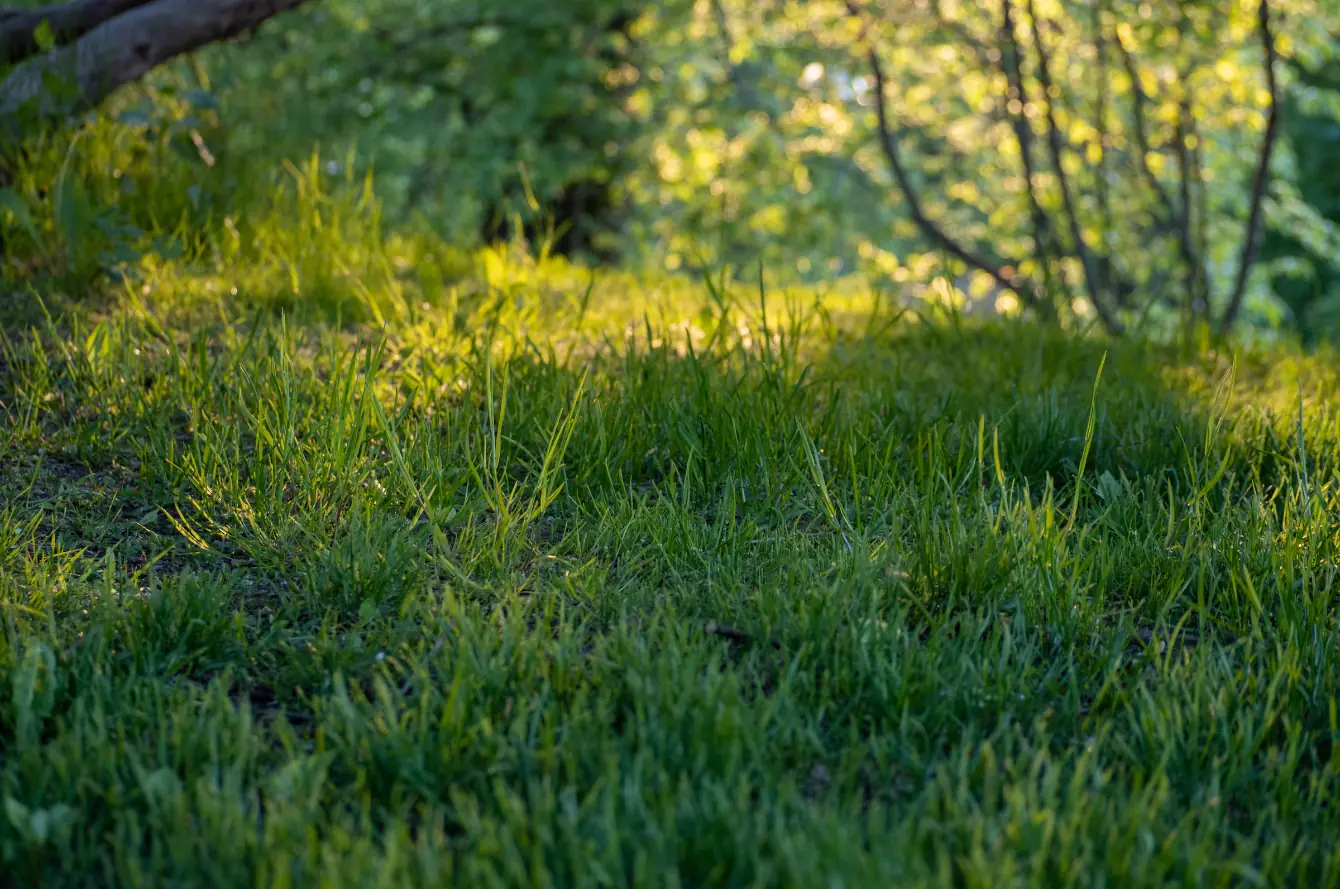
How to spot it
- Round leaves with scalloped edges, growing in pairs along the stem.
- Square stems that creep along the ground and put down roots where they touch soil.
- Small purple-blue flowers in spring.
- A minty smell when you mow it. It's a member of the mint family.
It does best in shady, damp spots where the grass is already thin.
When to treat it
Fall. Perennial weeds pull energy down into their roots in fall, and weed control goes with it. MSU's turf specialists point to early October in Michigan, while the weeds are still actively growing.
The next best time is spring, while it's flowering. Either way, expect it to take more than one round.
What you can do
- Don't count on pulling it. Pieces of stem left behind root again.
- Thicken the grass. Mow at 3 inches or higher, feed the lawn through the season and aerate compacted soil, so creeping Charlie has fewer open spots to fill.
- Rake leaves before a fall treatment so the weed control can reach the leaves.
How Hersch's handles it
Our fertilization and weed control programs treat broadleaf weeds through the season, with fall rounds when creeping Charlie is easiest to knock out. See also aeration and overseeding.
Read more on the blog: Creeping Charlie, Dandelions and Clover: Why Fall Is the Time to Treat