
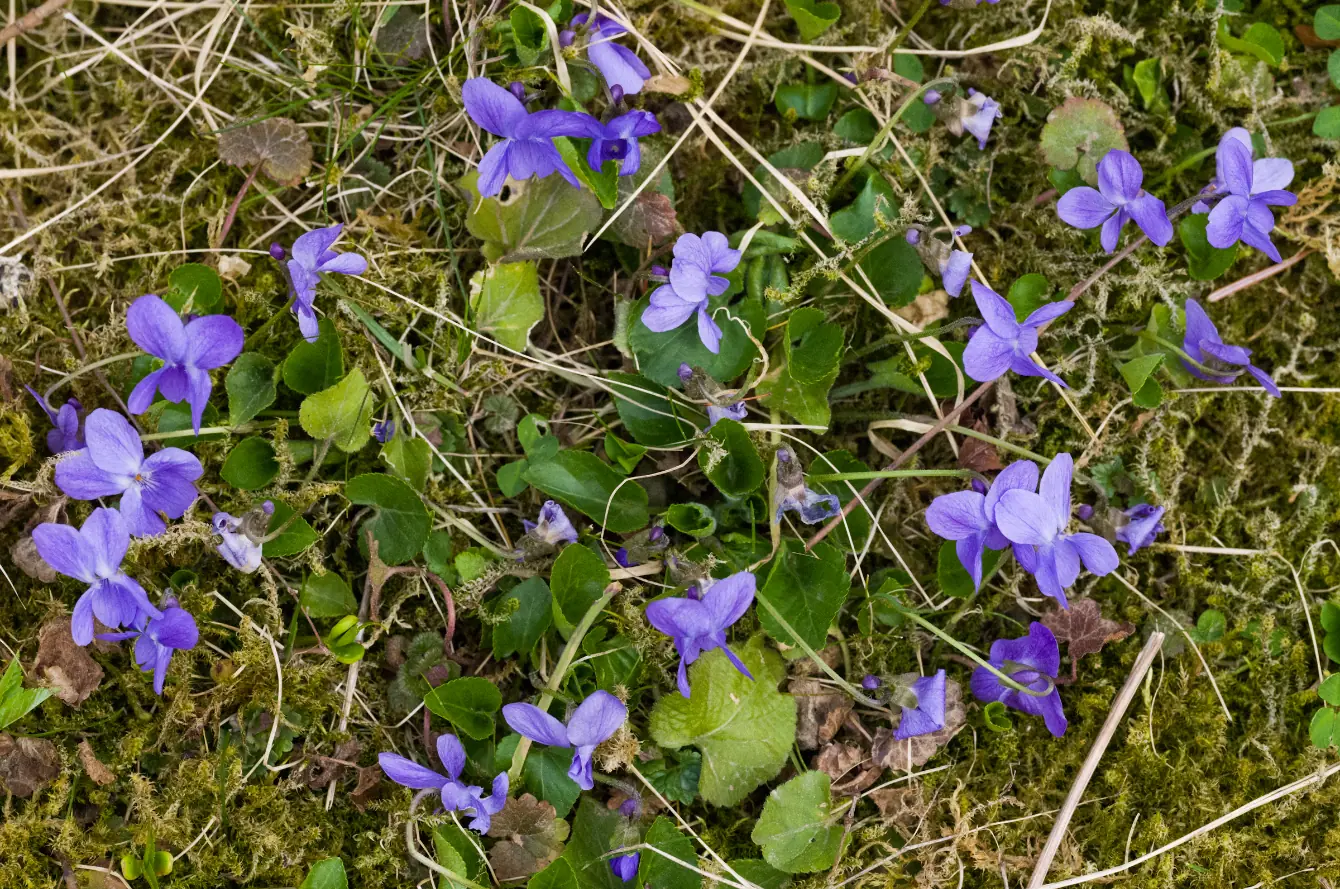
How to spot it
- Low clumps of heart-shaped leaves, often cupped into a funnel shape.
- Purple-blue, sometimes white, flowers in spring.
- A dense, fibrous root system that holds on tight.
Why they show up
MSU says wild violets take over shaded, well-fertilized spots with moist soil, where they can easily outcompete grass. They often creep in from wooded areas next door, and they're very common in new subdivisions built on land that used to be woods.
When to treat them
Fall is the best time, and spring flowering is the second best. Wild violets almost always take more than one round. The waxy leaves shed weed control, so persistence is the whole game.
What you can do
- Thicken the grass where it can grow. Mow high, feed and aerate.
- Be realistic about deep shade. Where grass struggles, violets will keep winning until the grass is thicker than they are.
How Hersch's handles it
Our fertilization and weed control programs treat wild violets through the season. Expect it to take more than one round. See also aeration and overseeding.
Read more on the blog: Creeping Charlie, Dandelions and Clover: Why Fall Is the Time to Treat