
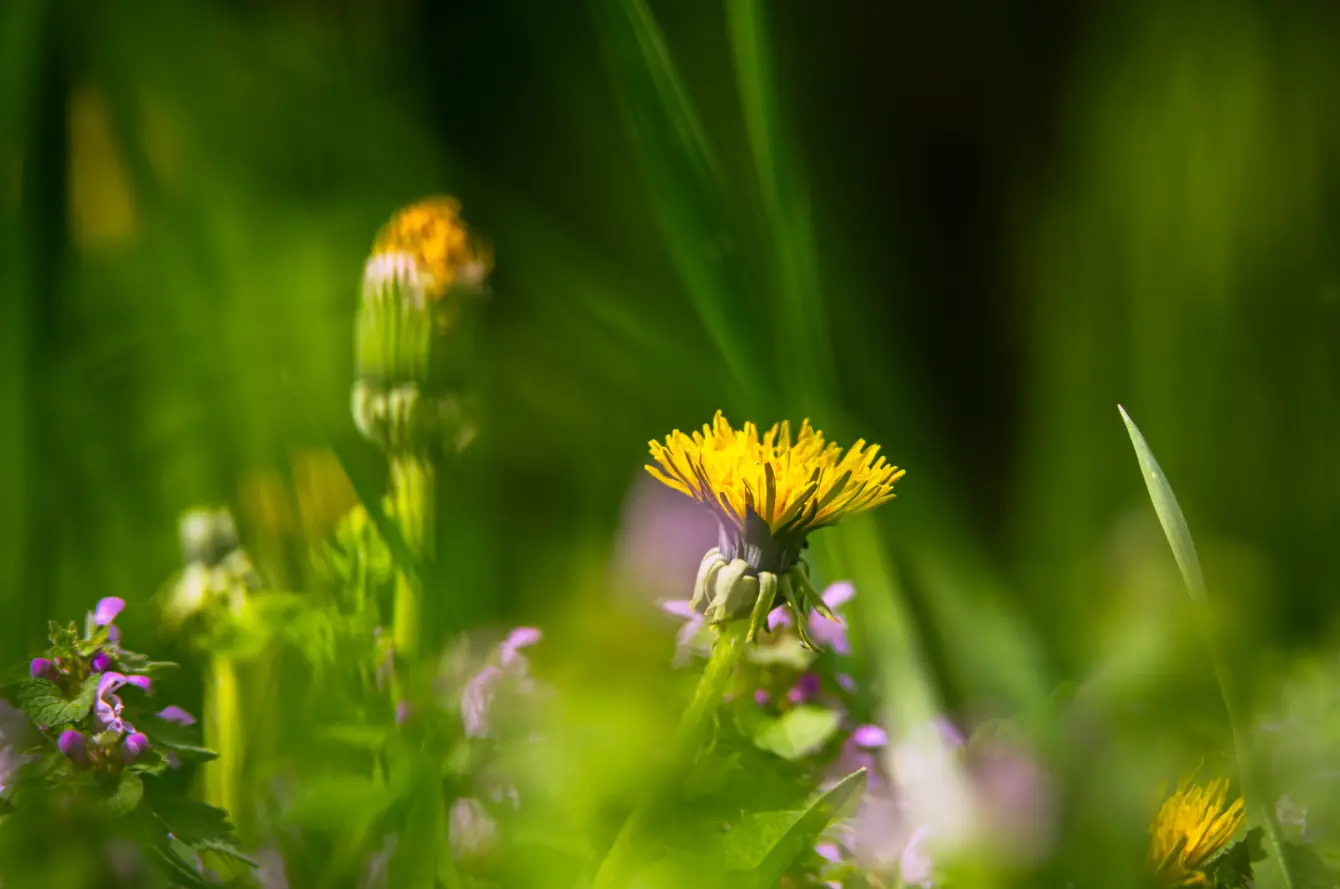
How to spot it
- A flat rosette of long, deeply toothed leaves.
- Bright yellow flowers in spring, followed by white puffballs that scatter seed across the neighborhood.
- A thick taproot that can break off and regrow if you pull it.
MSU Extension notes that dandelions, like most lawn weeds, point to thin spots: they move in where the grass isn't dense enough to keep them out.
When to treat it
Fall is the best time to control perennial broadleaf weeds like dandelions.
In spring, MSU suggests resisting the urge to spray during the first flush of yellow flowers. The puffball stage, right after the plant has spent its energy flowering, is when it's weakest. Treating earlier, during flowering, still burns down the rosette and keeps it from making seed.
What you can do
- Mow high and leave the clippings.
- Feed the lawn so it fills in.
- Core aerate compacted soil. MSU says a denser lawn will start to outcompete dandelions on its own.
How Hersch's handles it
Our fertilization and weed control programs treat broadleaf weeds like dandelions through the season, including in fall. See also aeration and overseeding.
Read more on the blog: Creeping Charlie, Dandelions and Clover: Why Fall Is the Time to Treat