
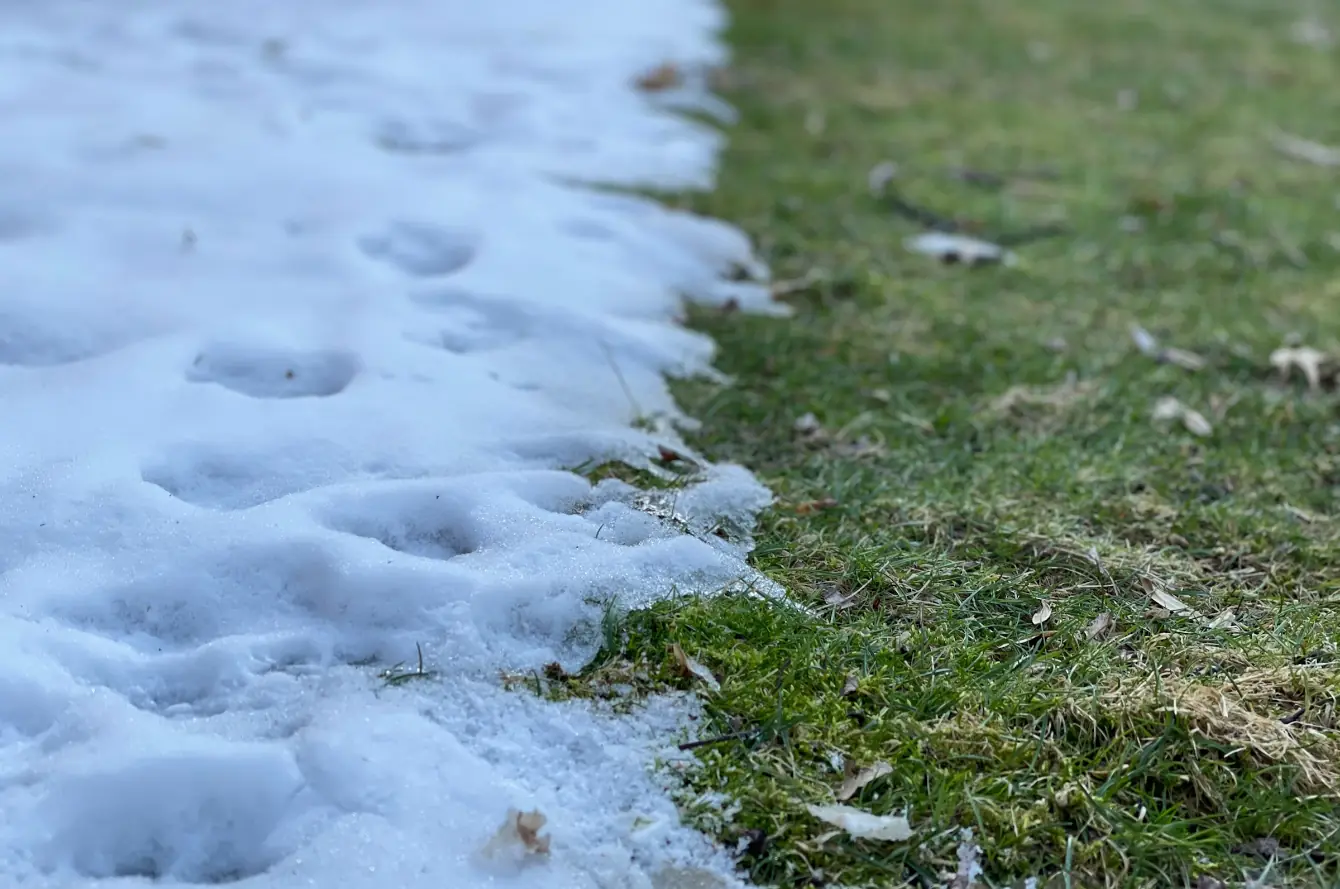
How to spot it
- Gray snow mold: round, straw-colored or grayish-brown patches after snowmelt. MSU Extension says they range from 3 to 24 inches across, most between 6 and 12. It needs long snow cover.
- Pink snow mold: doesn't need snow. It starts as small copper-colored spots, 1 to 3 inches across, and the grass can take on a pinkish color in cool, wet weather.
What to do in spring
Rake lightly with a leaf rake to loosen the matted blades so new growth comes through faster. If a patch is still bare after the rest of the lawn greens up, it may need reseeding.
Make it less likely next winter
- Don't push lush growth into winter. MSU advises timing nitrogen so it doesn't stimulate growth close to the first snowfall.
- Clear leaves before the snow.
- Spread out snow piles. The spots where snow sits longest are where it tends to show up.
Where it comes back every year, MSU says preventive fungicide is the best control, and it has to go down before the first snowfall.
How Hersch's handles it
Our lawn disease control program is aimed at leaf spot, dollar spot and brown patch. If snow mold keeps coming back on your lawn, call the office at 1-800-THE-LAWN and we'll talk through it. See also fertilization and weed control.
Read more on the blog: Snow Mold in Michigan Lawns: What Those Matted Patches Mean