How to spot it
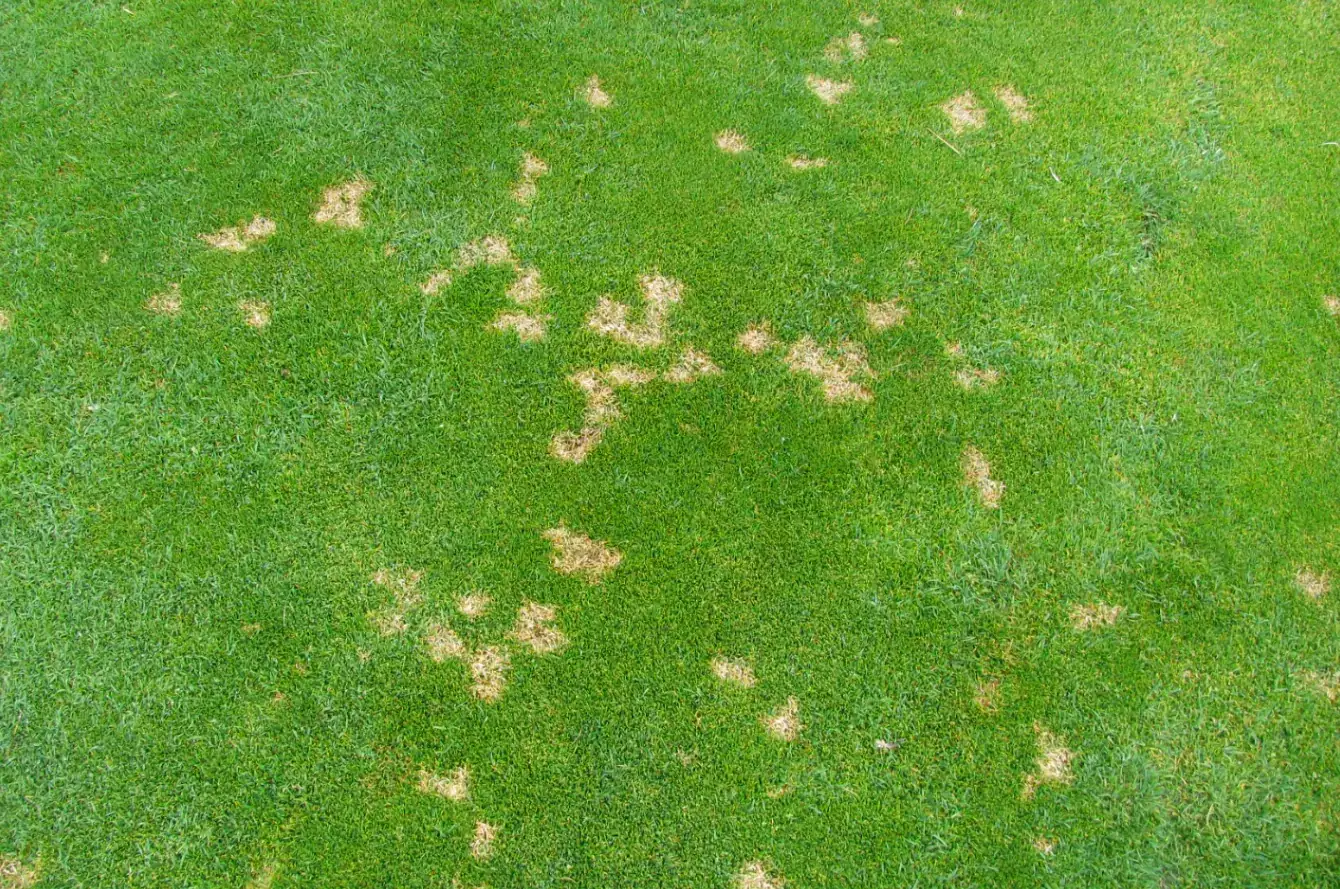
- Round, bleached or straw-colored spots, from the size of a quarter to the size of a silver dollar, that can merge into larger patches.
- Tan or bleached spots on individual blades, often with a reddish-brown band at the edge.
- Fluffy white fungal growth on the grass on mornings with heavy dew, while it's active.
When it shows up
MSU says dollar spot is active when daytime temperatures run between about 59 and 88 degrees, and it's favored by warm, humid days followed by cool nights with heavy dew.
What you can do
- Keep the lawn fed. On home lawns, MSU links dollar spot to low nitrogen. Steady feeding keeps grass growing through it.
- Water deeply and early in the day, so the grass doesn't sit wet overnight.
When feeding and watering aren't enough, a fungicide can suppress it.
How Hersch's handles it
Our fertilization and weed control programs keep the lawn fed through the season, which is the first line of defense against dollar spot. Our lawn disease control program, four preventive applications a year, targets dollar spot, along with leaf spot and brown patch.