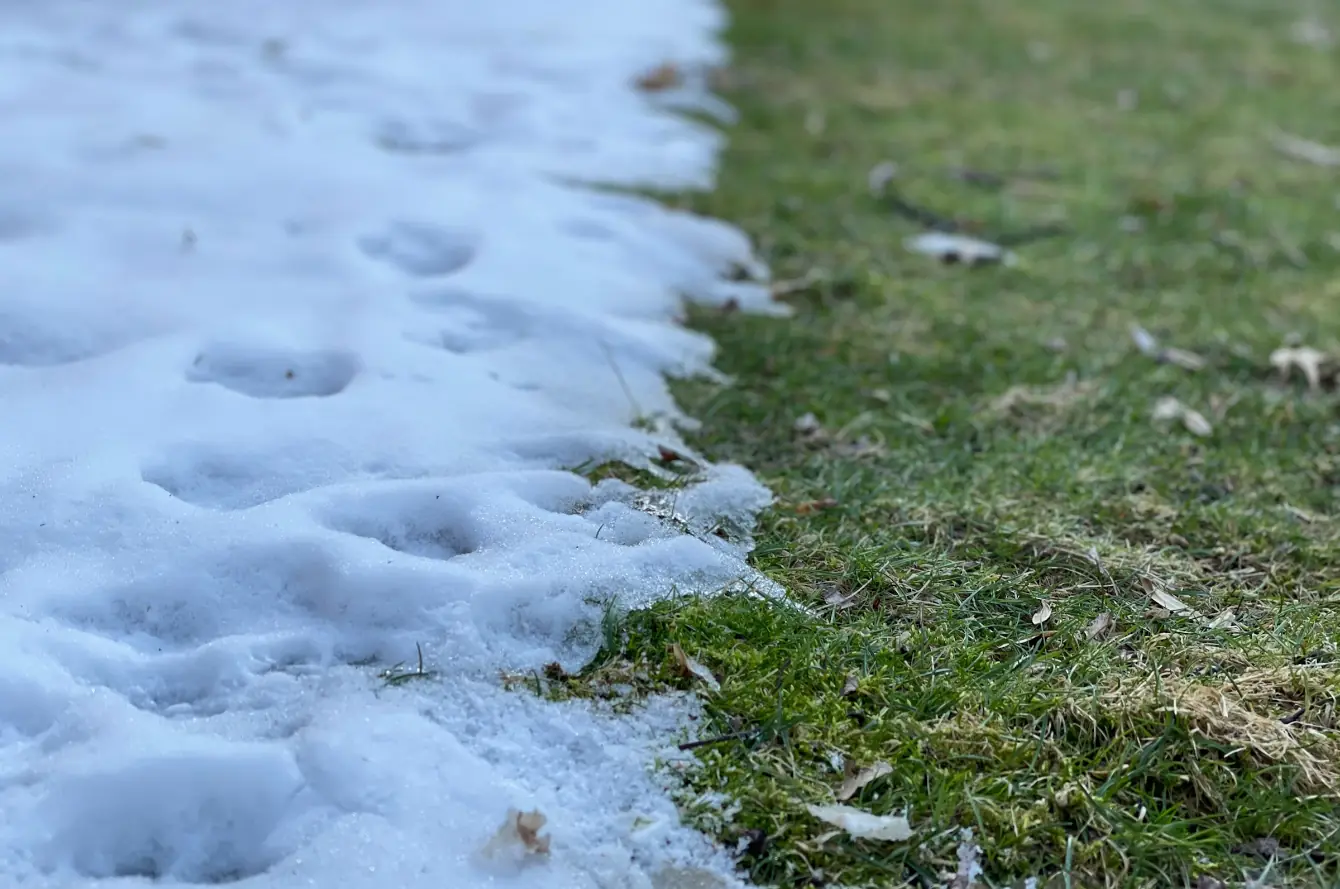
When the snow finally melts, some lawns come out with matted, crusty circles that look gray, tan or pinkish. That's usually snow mold, a group of fungal diseases that work under the snow while the rest of the lawn sleeps. It looks bad, but it's usually less serious than it looks.
Gray snow mold
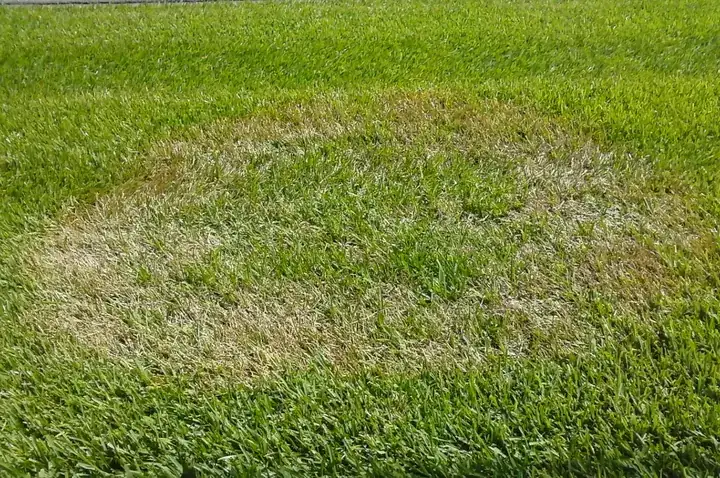
Gray snow mold shows up after snowmelt as round, straw-colored or grayish-brown patches. Michigan State University Extension says the spots range from 3 to 24 inches across, with most between 6 and 12 inches. The grass is matted down, and you can often see grayish-white fungal growth around the edges right after the snow melts.
It needs long stretches of snow cover, and it's worse in winters when snow falls on ground that hasn't frozen yet. The fungus infects at temperatures between 30 and 55 degrees.
Pink snow mold
Pink snow mold, also called Microdochium patch, doesn't need snow at all. MSU notes it can show up with or without snow cover during cool, wet weather. New infections start as small copper-colored spots, usually 1 to 3 inches across, and the affected grass can take on a pinkish color.
Will the grass come back?
Usually, yes. MSU's turf specialists say snow mold in most cases doesn't kill the grass plant, just the leaf blades. A light raking with a leaf rake loosens the matted, dead blades so new growth comes through faster. Or you can wait and let the grass push through on its own.
If a patch is still bare after the rest of the lawn has greened up, it may need reseeding.
Make it less likely next winter
- Don't push lush growth into winter. MSU advises timing nitrogen so it doesn't stimulate new growth close to the first snowfall.
- Clear leaves and debris before the snow. A mat of leaves pressed down under the snow can leave dead patches behind.
- Spread out the snow piles. Snow mold needs long snow cover, so the spots where snow sits longest, like the ends of the driveway, are where it tends to show up.
Where snow mold comes back year after year, MSU says preventive fungicide is the best control, and timing is everything: it has to go down before the first snowfall.
How Hersch's handles it
Most snow mold needs nothing more than a spring raking. If your lawn gets it every year, ask about lawn disease control. Your technician will look at what's causing it before recommending treatment, and a season-long fertilization program helps the lawn fill back in come spring.