
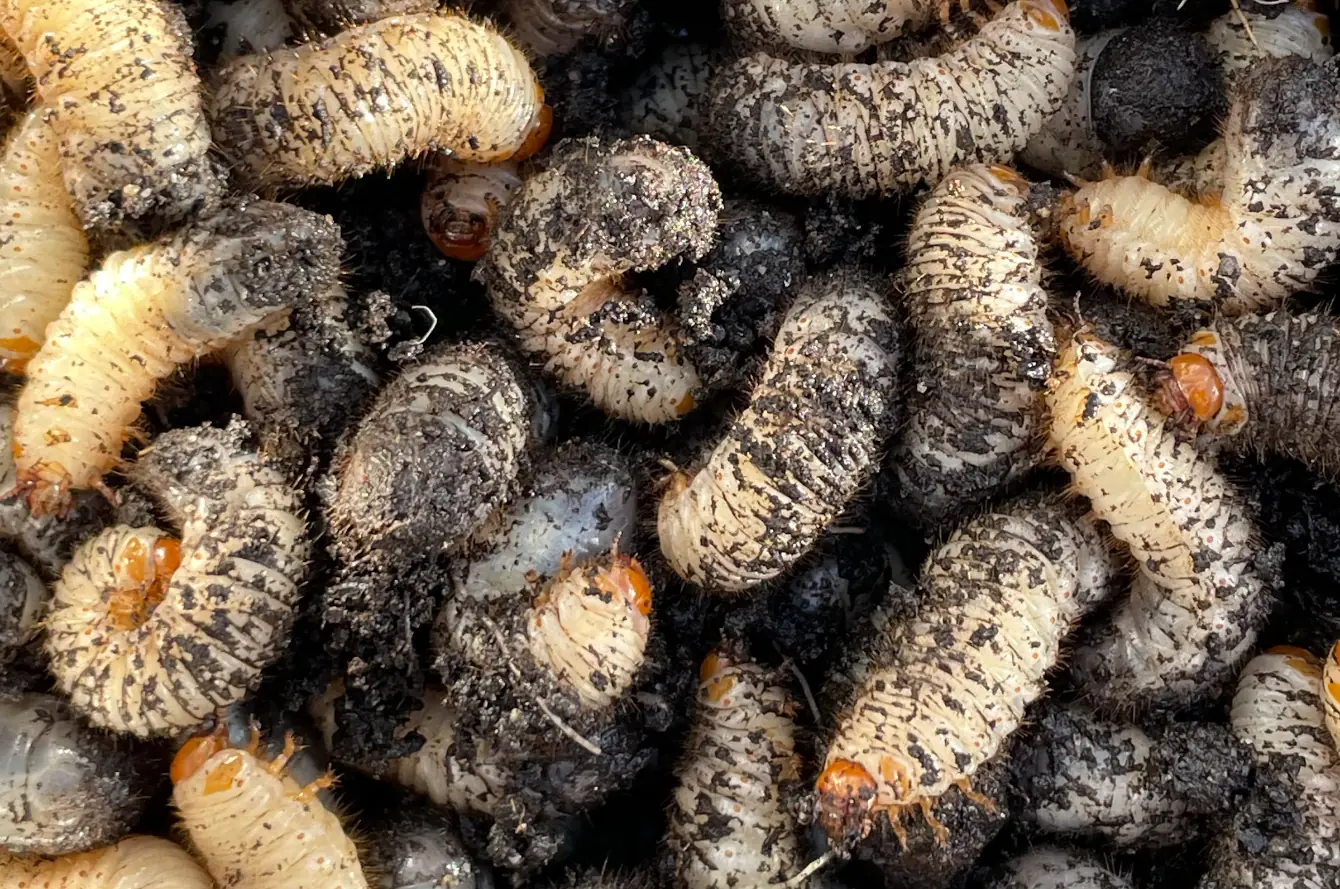
How to spot it
- Turf that pulls up like loose carpet. With the roots eaten, nothing holds it down.
- Thin, lumpy patches that don't green up when you water.
- Animals digging. Skunks, raccoons and birds tear up lawns to get at grubs.
Finding one or two grubs isn't a reason to treat. MSU Extension notes that a healthy lawn can handle a few grubs per square foot without showing damage.
When to treat
Timing is everything. Most grub control is preventive: it needs to be in the soil when beetle eggs hatch in summer. MSU warns that preventive products won't work on grubs from mid-October through mid-May, so treating in spring for grubs you found in spring is usually wasted money.
What you can do
- Mow at 3.5 inches. MSU says a taller lawn grows a bigger root mass that grubs affect less.
- Water through the summer. Watered lawns ride out grubs better than lawns left to go dry.
- Reseed in late summer or early fall where grubs have thinned the lawn.
How Hersch's handles it
Grub control is included in our lawn program, applied with the third application in early summer, right in the preventive window. See also aeration and overseeding.
Read more on the blog: Grubs in Michigan Lawns: How to Spot Damage and When Prevention Works