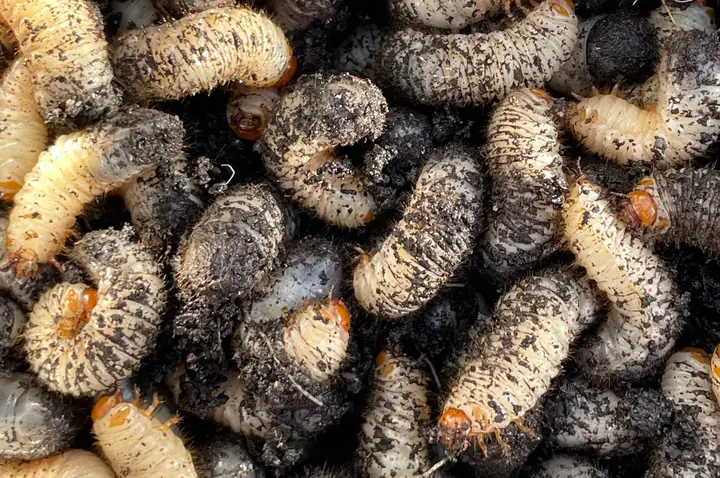
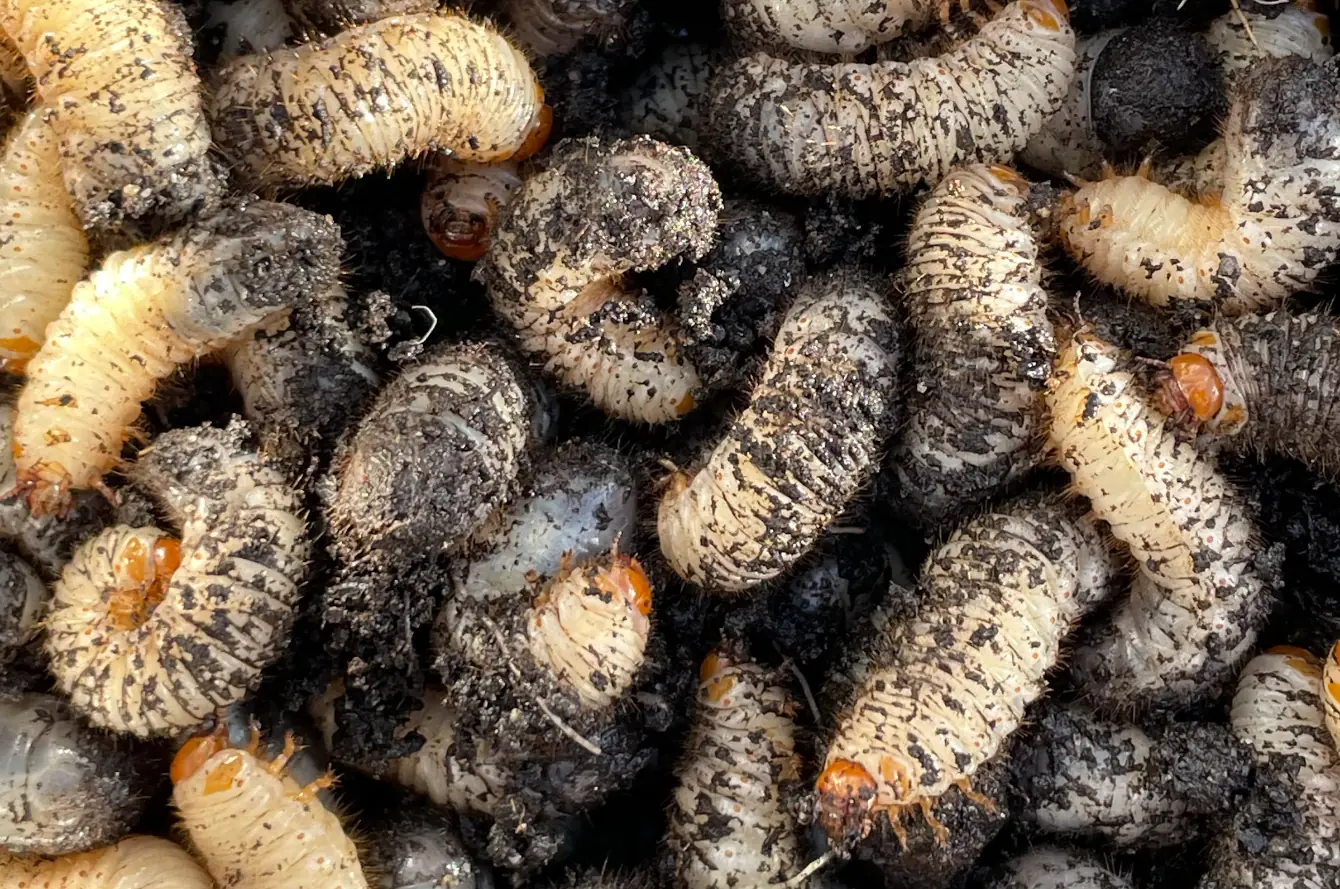
Grubs are the C-shaped, cream-colored larvae of beetles like Japanese beetles and European chafers. They live in the soil and eat grass roots. A lawn can look fine right up until it doesn't.
Signs of grub damage
- Turf that pulls up like loose carpet. With the roots eaten, the grass isn't anchored.
- Thin, lumpy patches that don't green up when you water.
- Animals digging. Skunks, raccoons and birds tear up lawns to get at grubs.
Don't panic over one grub
Michigan State University Extension points out that finding one or two grubs doesn't mean you need to treat. A healthy, well-kept lawn can hold a few grubs per square foot without showing damage.
Timing is everything
Most grub control products are preventive: they're meant to be in the soil when beetle eggs hatch in summer, before the new grubs start feeding. MSU warns that these preventive products won't work on grubs from mid-October through mid-May, so a treatment in spring for grubs you found in spring is usually wasted money. The preventive window runs from late spring into midsummer.
Make your lawn grub-tolerant
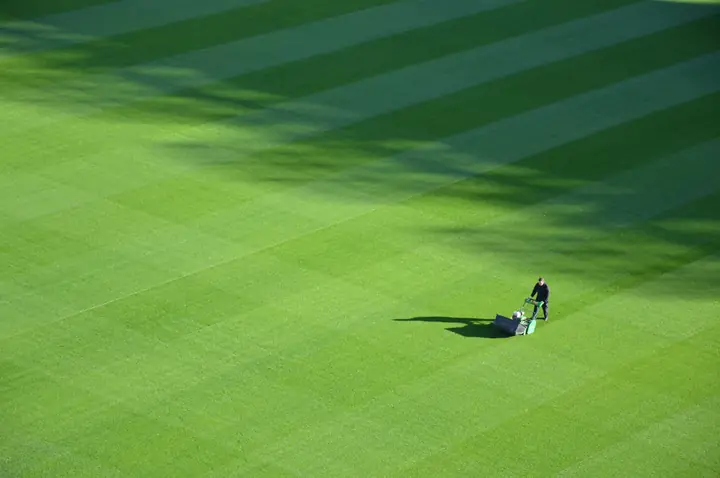
- Mow at 3.5 inches. MSU says raising the mowing height grows a larger root mass that grubs affect less.
- Water through the summer. Watered lawns survive grub infestations better than lawns left to go dry.
- Fix damage in fall. Late summer and early fall is the best time to reseed areas grubs have thinned.
How Hersch's handles it
Grub control is included in our lawn program, applied with the third application in early summer, right in the preventive window. Learn more about grub and insect control, or about aeration and overseeding to repair damage.