
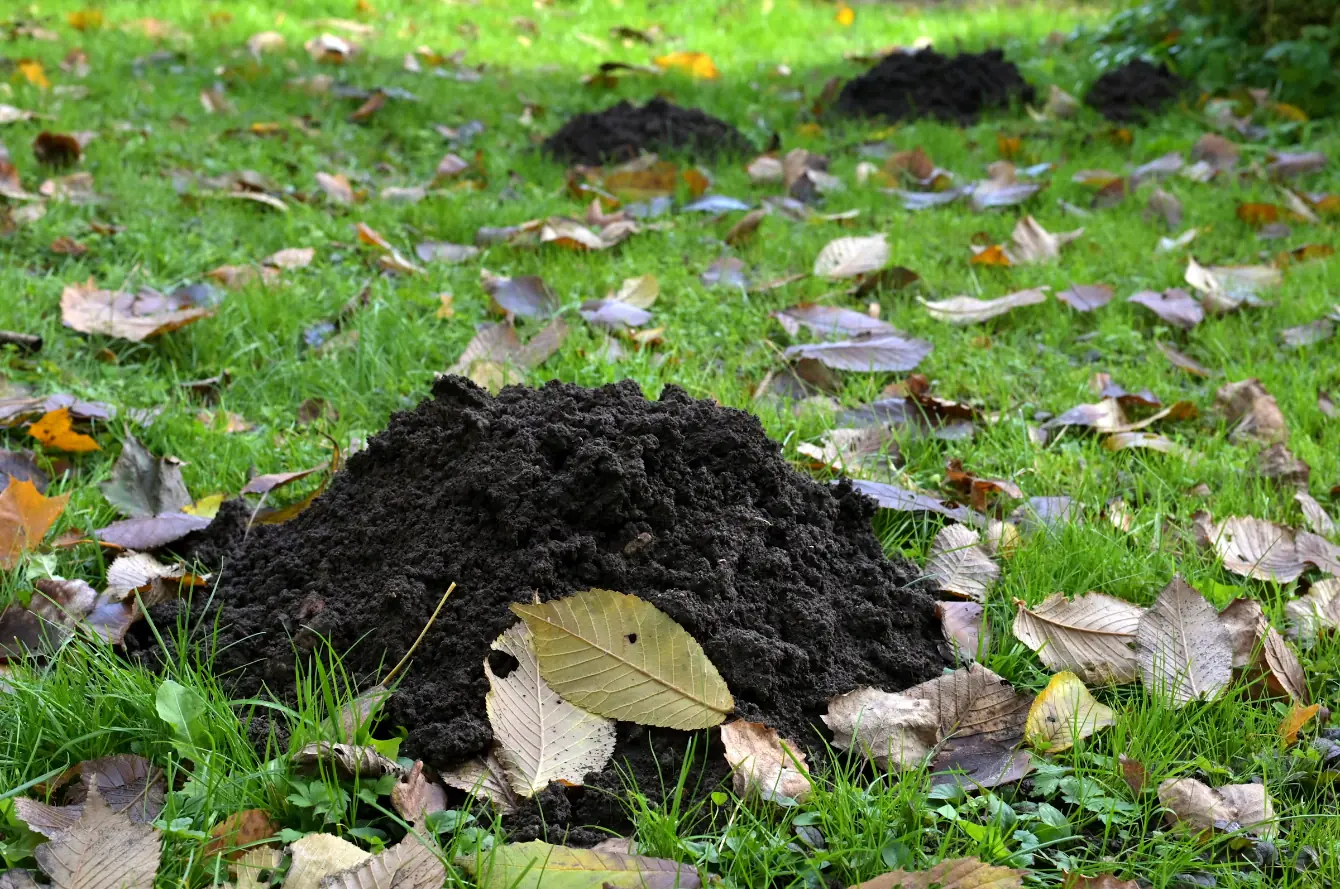
How to spot it
- Raised ridges just under the surface: eastern moles.
- Volcano-shaped piles of soil: star-nosed moles, which tunnel deeper and are usually harder to control.
MSU Extension says damage can show up any time from March through November, and moles can keep pushing up soil in winter when the ground is only partly frozen.
Why grub control alone won't fix it
About 80 percent of a mole's diet is earthworms, according to MSU. The grass dies because tunnels lift it off the soil, not because anything is eating it. MSU's advice: don't use grub control for moles unless you've actually found grubs at the edge of the dead grass.
What works
- Trapping, which MSU calls the most effective method. It takes skill.
- Baits placed in active tunnels. Placement is everything.
- Castor oil repellents, which can move eastern moles out for a while but wash out in heavy rain.
To find the active tunnels, press the ridges down with your feet and see which ones get pushed back up.
How Hersch's handles it
Our mole control program places earthworm-shaped bait right in the tunnels moles are using, three applications in all.
Read more on the blog: Moles in Michigan Lawns: What They Eat and What Actually Works