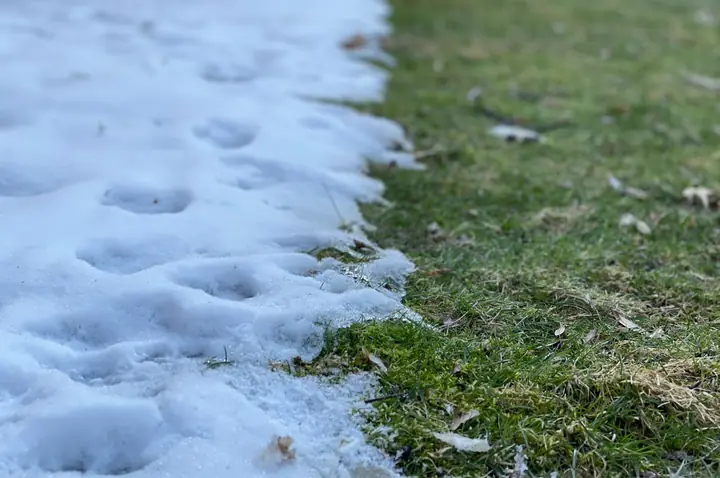

Every Michigan spring, the same brown strip shows up along driveways, sidewalks and the street: grass burned by a winter's worth of de-icing salt. Salt keeps people from slipping, so it isn't going anywhere. But a few habits can keep it from killing the edge of your lawn and the shrubs next to the walk.
How salt hurts grass and plants
Sodium chloride, ordinary rock salt, is the most common de-icer. Michigan State University Extension explains that when salt builds up in the soil next to driveways and sidewalks, it breaks down into sodium and chloride. Sodium gets in the way of the potassium, calcium and magnesium plants need, chloride builds up in the leaves, and the salt can pull water away from the roots. The damage can look a lot like drought, even after a wet spring.
Along busy roads, salty spray from passing cars adds to the problem. MSU names white pines, roses, rhododendrons and yews as especially sensitive.
Use less salt this winter
- Shovel first, salt second. Clear as much snow as you can so salt only has to handle the ice that's left.
- Use sand for traction. MSU points out that coarse sand gives you grip on ice without adding any salt.
- Choose a gentler de-icer near plants. Calcium chloride and calcium magnesium acetate are easier on plants than rock salt, though they cost more.
- Watch where the salty snow goes. Try not to pile shoveled or plowed snow on the same patch of lawn, or on top of shrub beds, all winter.
Protect shrubs along the road
For plants that catch spray from the street, MSU suggests a simple barrier of stakes and burlap. If you're replanting near a road or walk, salt-tolerant plants are the long-term fix.
Help the lawn recover in spring
- Flush the soil. Spring rain washes salt down and out of the root zone. If spring turns dry, MSU recommends watering the salty areas to help it along.
- Rake where the snow sat. MSU suggests lightly raking the grass where snow was piled along the driveway and sidewalk all winter.
- Reseed what doesn't come back. MSU notes that grass killed by de-icing salt may need reseeding.
How Hersch's handles it
If the strip along your driveway is still brown once the rest of the lawn has greened up, point it out to your technician. Fall aeration and overseeding is the best time to thicken it back up, and tree and shrub care keeps salt-stressed shrubs fed and watched through the season.